


Mortgage Aggregator Fees for Brokers in Australia: What You Need to Know
If you’re a mortgage broker in Australia, one of the most important partnerships you’ll ever make is with your aggregator. From helping you access a wide panel of lenders to providing compliance and back-office support, aggregators play a massive role in your brokerage’s success. But what often gets overlooked in this relationship is the cost.
Understanding mortgage aggregator fees is crucial, not just so you know what you’re paying, but so you can assess what you’re really getting in return. In this blog, we’ll break down the common fees, the hidden costs to watch out for, and what to consider when choosing the best aggregator for mortgage brokers.
What Is a Mortgage Aggregator?
A mortgage aggregator acts as a middleman between lenders and individual mortgage brokers. Instead of brokers dealing with dozens of lenders directly, the aggregator sets up those relationships and provides brokers access through a single platform. Think of them as the infrastructure that powers your brokerage business, handling software, lender accreditations, compliance monitoring, training, and more.
Working with an aggregator mortgage broker setup also allows newer brokers to operate under the aggregator’s Australian Credit Licence, removing the need to get their own license right away. That’s a huge plus for sole operators or small firms.
Breaking Down Mortgage Aggregator Fee Structures
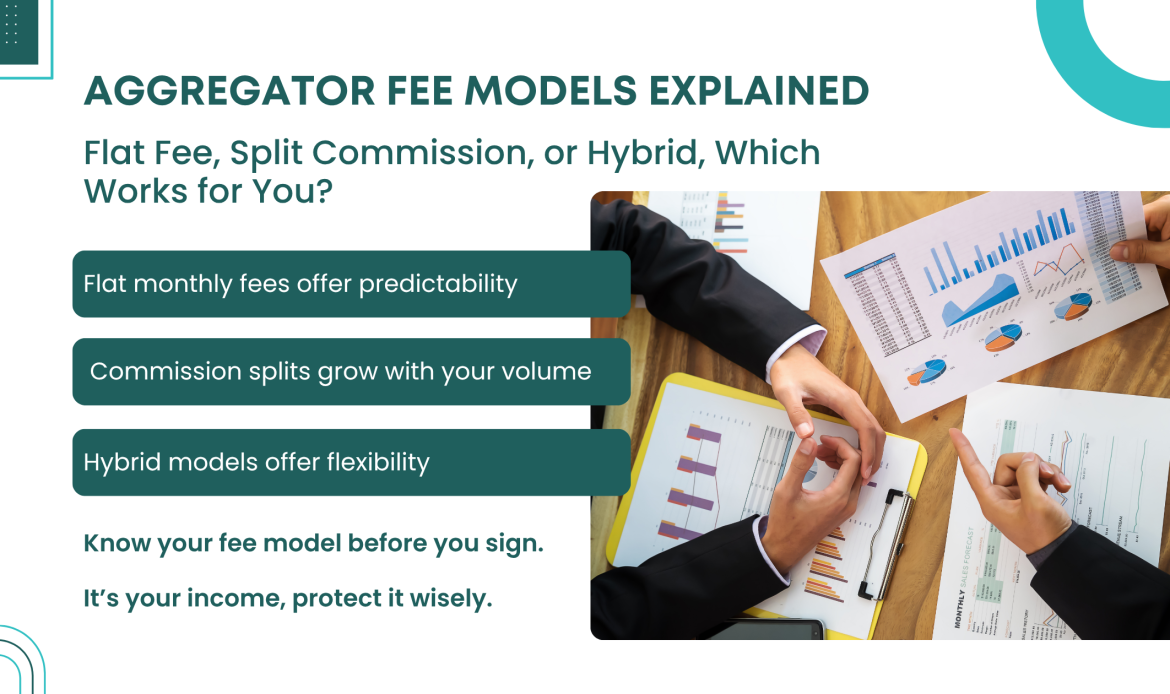
Now, let’s talk about money. The mortgage aggregator fees you’ll pay typically fall under one of four common models:
1. Flat Monthly Fee
You pay a fixed monthly or annual fee for access to the aggregator’s services. This model gives you predictability in budgeting, but it may not reflect the actual value you receive, especially if you’re a low-volume broker.
2. Percentage of Commission
This is one of the most common structures. The aggregator takes a cut (usually 5%–20%) of your upfront and trail commissions. The upside is you only pay as you earn, but the downside is that you’re paying more the more successful you become.
3. Tiered or Sliding Scale
Fees decrease as your loan volume increases. For example, a broker writing $2M in loans a month might pay 15%, while someone writing $10M only pays 7%. It’s performance-based and incentivises growth.
4. Hybrid Model
A mix of flat fee and commission-based, some brokers prefer this to strike a balance between fixed costs and variable earnings.
Each model has its pros and cons, and the “right” one often depends on your business volume and preferred working style.
Common Aggregator Fees to Watch Out For
Here’s a deeper dive into the types of fees that can be bundled under your aggregator agreement:
- Platform or Technology Fee – For using the aggregator’s CRM, compliance software, or data tools.
- Membership/Admin Fee – Often charged annually for general admin overheads.
- Compliance Fee – This could be monthly or per file; covers audits, documentation checks, and credit advice reviews.
- Training & CPD Fees – Some aggregators charge for professional development, others offer it as part of the package.
- Onboarding/Exit Fees – Getting in might be free, but getting out can be costly. Always check if there’s a termination fee or notice period.
- Marketing Support Fees – Some aggregators provide lead-gen tools or templates at an added cost.
- Commission Clawback Policies – While not a “fee” per se, it’s vital to understand who bears the burden when a lender claws back a commission.
These are the obvious ones. Let’s now look at the less obvious.
Hidden Costs You Might Overlook
Not all fees are neatly outlined on page one of a contract. Here are a few hidden costs that could catch you off guard:
- Additional licence holder charges if you’re hiring more brokers.
- Non-lodgement penalties, if you’re not settling loans regularly.
- File audit surcharges if you have high loan volume or frequent compliance issues.
- Exit load, a surprise lump sum for leaving earlier than your contract allows.
When calculating the real home loan aggregator cost, make sure you ask about all potential fees, not just the headline commission split.
How Do Clawback Fees Work in Aggregator Agreements?
Clawbacks occur when a loan is discharged early, usually within 12–24 months, and the lender takes back part or all of the paid commission. Some aggregators pass this clawback cost entirely to the broker, while others might absorb a portion.
Always ask upfront:
- Who bears the clawback?
- Is there a shared risk policy?
- How does it affect my bottom line?
It’s not just about mortgage aggregator fees, it’s about the full picture of cash flow stability.
According to The Australian, as of late 2024, banks still pay around 0.65% upfront and 0.15% trail commission to brokers.
However, with major lenders facing tighter net interest margins, there’s increasing pressure on these commission structures, fueling speculation about potential reductions in the near future.
This puts added focus on mortgage aggregator fees, especially for brokers relying on commission income as their primary revenue stream.
Choosing the Right Aggregator: Beyond Just Cost
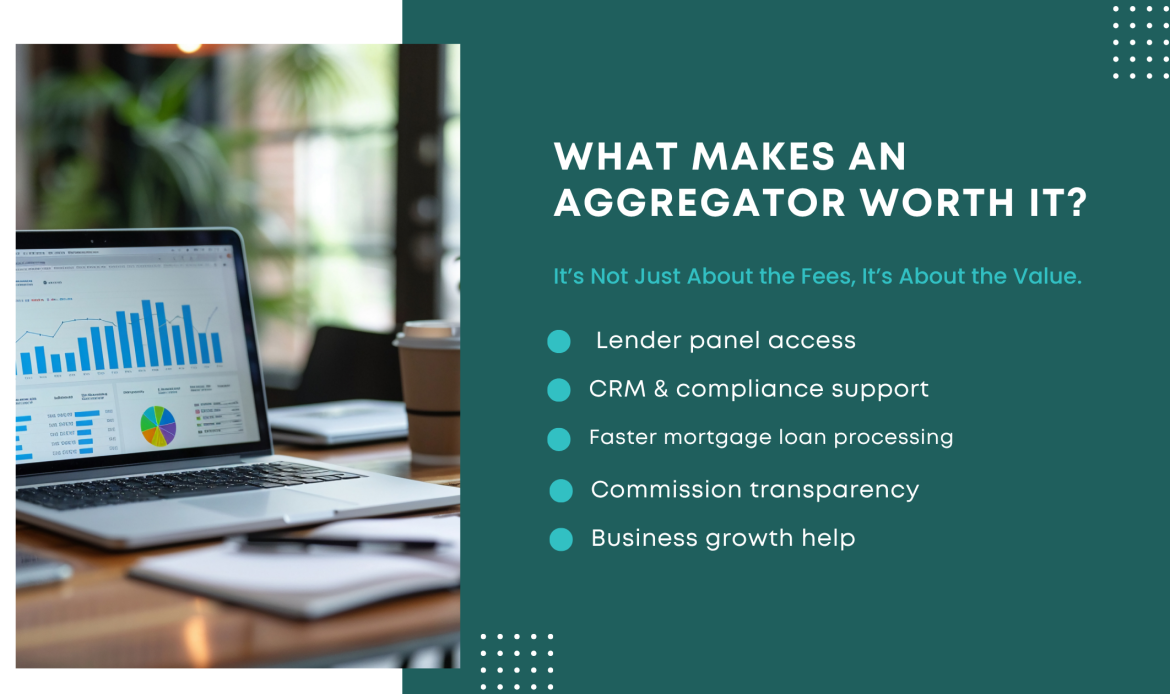
While cost is a key factor, there’s more to choosing the best aggregator for mortgage brokers than just looking at fees. Ask yourself:
- Do they offer strong compliance support?
- How broad is their lender panel?
- Is their CRM system efficient and user-friendly?
- What kind of mentoring or business development support is available?
- Can they assist you in scaling your brokerage?
A low-cost aggregator that doesn’t support your growth may end up costing you more in the long run. Some aggregators offer a hands-on support model that includes marketing tools, onboarding assistance, and help with mortgage loan processing, especially useful for brokers scaling quickly or new to the industry.
Aggregator Size: Big Brand vs Boutique
Should you go with a big-name finance mortgage broker aggregator or a boutique operation? Here’s a quick comparison:
| Feature | Big Aggregator | Boutique Aggregator |
|---|---|---|
| Lender Panel | Broad | Narrower |
| Fees | More structured | Sometimes negotiable |
| Support | Standardised | Personalised |
| Innovation | Slower adoption | Agile and fast |
The decision depends on your needs. If you’re an independent broker looking for flexibility, a boutique aggregator may offer better value. But if you want all-in-one tools and strong lender access, a larger home loan aggregator may be worth the premium.
Can You Negotiate Aggregator Fees?
In many cases, yes. Especially if you’re an experienced broker or planning to write high volume. Be prepared with:
- Your past loan volume stats
- Future growth plans
- What you’re looking for (e.g., better commission split, waived onboarding fee)
Don’t just sign a boilerplate contract. Get clear on what your mortgage rate aggregator provides in return for your fees, and push for terms that reflect your value.
Industry Trends in Aggregator Fees
Post-Royal Commission, the focus on compliance has grown significantly. This has pushed up some mortgage aggregator fees, especially around documentation review and responsible lending oversight.
However, there’s also a shift toward flexible models, with more aggregators offering options that cater to niche brokers (e.g., SMSF, expat loans, commercial property).
According to industry data cited by IBISWorld, the Mortgage Brokers industry in Australia is expected to generate $6.2 billion in revenue by 2025–26, with a compound annual growth rate of 10.6% over the past five years. This strong market outlook reinforces why it’s worth taking the time to assess your current aggregator relationship, not just for cost control, but for long-term scalability.
The rise of tech-based mortgage rate aggregator platforms is also disrupting the space, some are offering lower fees in exchange for less hand-holding. Others bundle marketing automation, digital credit assessments, and API integrations into their fee structures.
Final Thoughts: Is the Cost Worth the Support?
Selecting the right finance mortgage broker aggregator isn’t just about finding the lowest cost, it’s about choosing a long-term partner who supports your business vision.
Take time to compare aggregators not just on price, but also on support, reputation, compliance assistance, and growth potential. In many cases, a slightly higher fee may be justified by the value-added services that help you scale faster and avoid costly compliance mistakes.
Need Help Understanding Aggregator Costs?
If you’re evaluating aggregator options or feel like your current agreement isn’t giving you value for money, it might be time to get a second opinion. Reviewing your fee structures and support arrangements regularly can make a real difference to your brokerage’s profitability.

About Aneri Shah
Aneri Shah is the Director at Brokers Support Global (BSG), where she leads operations focusing on back-office support for Australian mortgage brokers. With over 4+ years of experience, Aneri specialises in loan processing, mortgage packaging, serviceability calculations, and post-settlement services.