

A regulatory compliance audit is a structured review of your brokerage’s operations to ensure adherence to all applicable laws, regulations, and industry standards. For mortgage brokers, this primarily involves meeting the obligations of the National Consumer Credit Protection NCCP Act, ASIC guidelines, and Anti-Money Laundering (AML) requirements.
Mortgage brokers now handle nearly three-quarters of all new residential home loans in Australia, according to Deloitte’s 2025 ‘Value of Mortgage Finance Broking’ report. This dominance means compliance isn’t just a regulatory requirement, it’s a critical business safeguard.
While external audits by a regulatory auditor may occur, proactive brokers often conduct internal audit and compliance checks throughout the year. This internal approach helps identify and correct gaps before they escalate into larger issues.
Think of it as a regular health check for your business, catching minor compliance “symptoms” before they become major legal headaches.
Why Compliance Audits Are Critical for Mortgage Brokers?
Mortgage brokers handle sensitive client information and facilitate major financial transactions. Non-compliance can have serious implications, including:
- Avoiding Penalties and Legal Risk
ASIC has clear expectations for responsible lending, record-keeping, and AML obligations. A legal compliance and audit ensures you’re protected from fines or legal action.
Recent high-profile cases highlight the cost of ignoring compliance. As reported by Reuters (June 2025), ASIC filed a lawsuit against Westpac’s RAMS unit for using falsified payslips and fabricated employers to push loan approvals, misconduct that resulted in millions in remediation and potential fines - Protecting Your License and Reputation
Even if you operate under an aggregator, you’re not immune to compliance responsibilities. A failed audit can lead to licensing issues and damage your reputation with lenders and clients. - Improving Operational Efficiency
Routine audits streamline processes, reduce documentation errors, and ensure your files are always audit-ready. - Building Client and Aggregator Trust
Brokers who maintain strong compliance practices instill confidence in clients and lending partners. Industry scrutiny is also intensifying, with The Australian reporting that major banks are re-evaluating commission structures for brokers as regulators focus on responsible lending and remuneration frameworks.
This isn’t just about ticking ASIC’s boxes, it’s about running a robust, risk-free business.
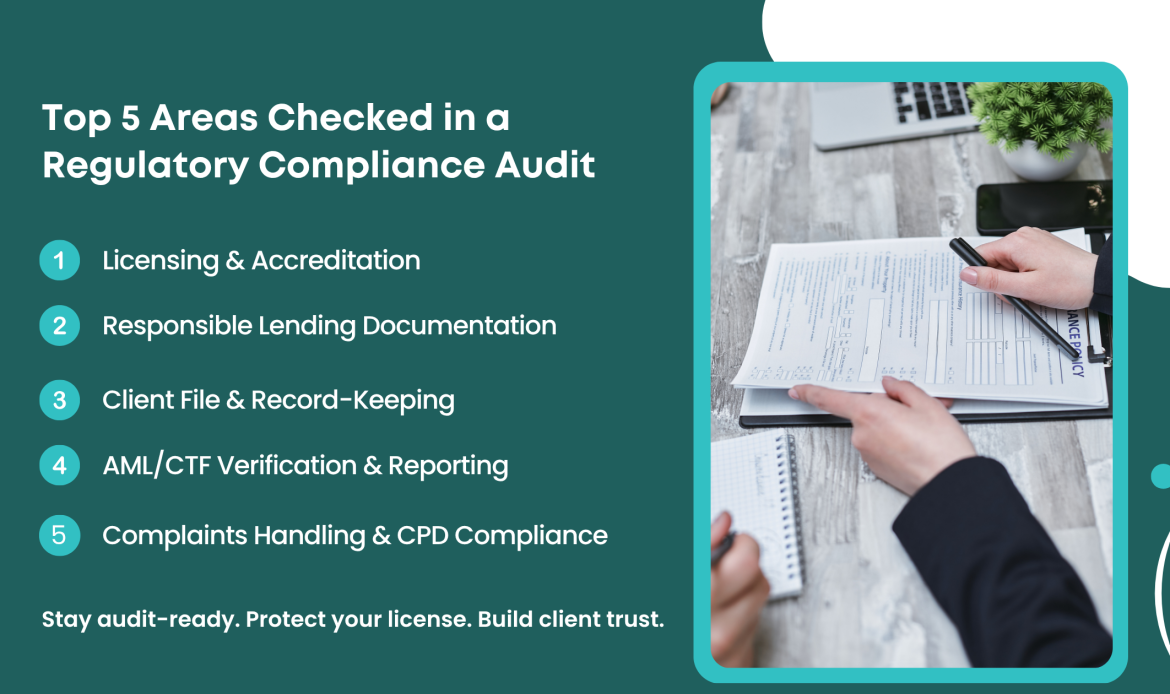
Key Areas Reviewed in a Mortgage Broker Compliance Audit
During a regulatory compliance audit, brokers can expect these areas to be under scrutiny:
- Licensing and Accreditation
Verification of your Australian Credit Licence (ACL) or credit representative status. - Responsible Lending Documentation
Are your loan recommendations well-documented, and can you clearly demonstrate why each loan is “not unsuitable” for the client? - Client File Reviews
Files must include application forms, credit guides, preliminary assessments, and supporting documentation. - AML Audit and CTF Compliance
Lenders and brokers must meet obligations under the Anti-Money Laundering and Counter-Terrorism Financing Act. A proper AML audit checks ID verification, record-keeping, and reporting processes.
Brokers must also ensure thorough background and reference checks for any representatives, as emphasized by ASIC’s Reference Checking and Information Sharing Protocol. This is a critical step to prevent future compliance breaches in the sector
- Training and Professional Development
ASIC requires brokers to complete ongoing CPD (continuing professional development). Training records must be up to date. - Complaints Handling
Properly logged complaints and a clear dispute resolution framework are essential. - Other Business-Specific Compliance Areas
While not always top-of-mind for brokers, maintaining safety and operational compliance can overlap with OHS compliance audit requirements, especially for multi-broker offices with staff.
By reviewing these areas, you ensure your brokerage is prepared for both internal and external regulatory reviews.
Common Compliance Gaps in Mortgage Broking
Many brokers assume that working under a mortgage aggregator shields them from compliance risks. While aggregators often provide frameworks, the responsibility still lies with the broker. Common issues include:
- Incomplete or missing client documentation.
- Outdated AML/CTF procedures or unverified ID checks.
- Poor complaints register management.
- Failure to document why a specific loan was chosen.
- Gaps in CPD records or staff training compliance.
Incentive-led risks remain under the microscope. The Financial Times recently highlighted how volume-based commissions and inadequate verification processes were flagged as ongoing regulatory concerns in Australia’s mortgage sector.
An internal audit and compliance review at regular intervals can help uncover these gaps before an external regulatory auditor does.
Brokers who keep their mortgage outsourcing to experienced compliance teams often find fewer errors in documentation and smoother audit outcomes, as professionals manage the heavy lifting behind the scenes.
How Often Should Brokers Conduct Compliance Audits?
The frequency of audits depends on the size and complexity of your brokerage. Industry best practices recommend:
- Annual audits for solo brokers or small operations.
- Quarterly or bi-annual audits for multi-broker offices or growing brokerages.
Regular auditing is also essential if you handle SMSFs (self-managed super funds). While mortgage brokers themselves might not directly manage funds, businesses involved in SMSF loans may be subject to SMSF compliance audits. These audits ensure that fund investments and lending practices comply with superannuation laws.
By proactively conducting audits, you’re not just avoiding penalties, you’re creating a culture of accountability and excellence.
How to Prepare for a Regulatory Compliance Audit?
Being audit-ready requires ongoing attention rather than last-minute scrambling. Here’s how to get prepared:
- Conduct a Pre-Audit Check
- Review client files and ensure all documentation is complete.
- Verify credit guides, loan assessments, and supporting documents.
- Update AML/CTF Registers
- Confirm that ID verification processes are up-to-date.
- Keep a record of all suspicious matter reports for the AML audit process.
- Maintain Training and CPD Records
- Ensure all staff certifications and training are logged and accessible.
- Ensure all staff certifications and training are logged and accessible.
- Implement Checklists and Calendars
- Using a compliance calendar ensures you never miss critical review dates or filing obligations.
- Using a compliance calendar ensures you never miss critical review dates or filing obligations.
- Engage External or Outsourced Support if Needed
A professional regulatory auditor or outsourced compliance partner can help maintain ongoing compliance, especially if your brokerage is scaling. Some brokers even opt for outsourced loan processing services to handle repetitive administrative work like document verification and file management, which reduces the risk of compliance gaps during audits.

The Role of Outsourced Compliance Support
As the mortgage broking landscape becomes more regulated, Outsourcing can:
- Conduct periodic legal compliance and audit reviews.
- Perform file audits and verify responsible lending documentation.
- Manage AML audit requirements and training record-keeping.
- Reduce the administrative burden so brokers can focus on growing their client base.
For busy brokerages, this approach can be a game-changer, ensuring compliance without overwhelming internal resources.
Conclusion: Compliance is Your Competitive Edge
For mortgage brokers in Australia, compliance is more than an obligation, it’s a business advantage. A proactive regulatory compliance audit protects your license, strengthens your reputation, and builds trust with clients and lenders.
By addressing areas like AML audit, internal audit and compliance, and even broader measures like OHS compliance audit, brokers can ensure their operations remain bulletproof.
Whether you manage a small brokerage or a growing multi-broker office, building a culture of compliance will not only help you avoid risk but also position you as a reliable, professional broker in a competitive market.

About Aneri Shah
Aneri Shah is the Director at Brokers Support Global (BSG), where she leads operations focusing on back-office support for Australian mortgage brokers. With over 4+ years of experience, Aneri specialises in loan processing, mortgage packaging, serviceability calculations, and post-settlement services.