


Advice Production Benchmarks & Financial Advice Turnaround: What Firms Should Know in 2025
In today’s financial advice industry, clients expect precision, compliance, and timely delivery, all without compromising on quality. For advice practices, understanding advice production benchmarks and setting realistic financial advice turnaround time standards isn’t just about efficiency; it’s about trust, credibility, and maintaining a competitive edge.
In today’s financial advice industry, clients expect precision, compliance, and timely delivery, all without compromising on quality. Many practices are turning to outsourced financial services to meet these expectations, reduce internal workload, and ensure seamless delivery of compliant advice.
But what exactly should firms be aiming for? And how can these benchmarks be measured and improved?
Why Advice Production Benchmarks Matter
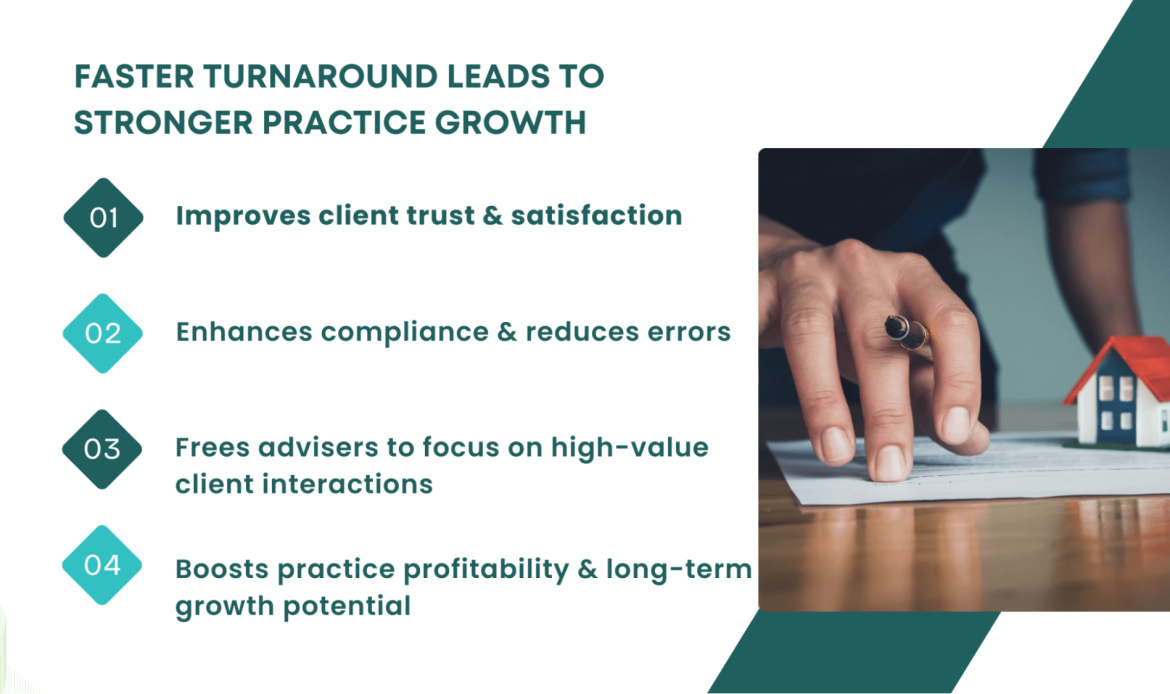
Benchmarks act as performance markers for how well a practice delivers advice. They cover everything from advice production turnaround times to quality measures, compliance accuracy, and costs involved. For clients, timely delivery builds confidence; for firms, it streamlines operations and enhances profitability.
Well-defined benchmarks provide:
- Clarity: Helping advice teams and paraplanners understand expectations.
- Consistency: Ensuring compliance and reducing error rates in financial advice production.
- Competitive Advantage: Allowing firms to meet or exceed advice firm turnaround time standards set by the industry.
Key Benchmarks in Advice Production
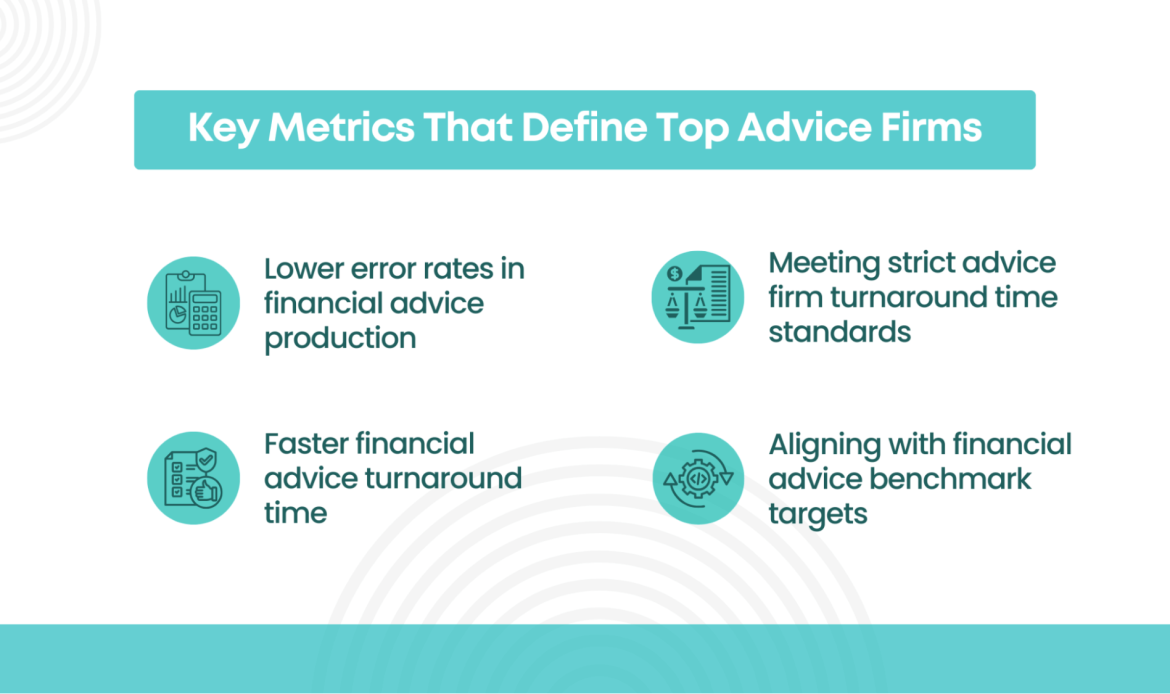
To assess how efficiently advice is being produced, firms look at several performance indicators:
1. Financial Advice Turnaround Time
This is the most critical metric. It measures the average time taken from client fact-finding to delivering a compliant Statement of Advice (SOA) or Record of Advice (ROA).
- Standard SOA: Typically 3–5 business days.
- Complex Advice Cases: Can extend to 7–10 business days or more, depending on data quality and compliance requirements.
Having defined financial advice benchmark targets ensures that advice teams remain on track while maintaining accuracy.
2. Quality and Accuracy Benchmarks
Beyond speed, quality plays a major role. High error rates in financial advice production can lead to compliance risks, client dissatisfaction, and reputational damage. Many top firms aim for first-pass accuracy rates of 90–95%, meaning advice passes compliance review with minimal changes required.
3. Advice Production Costs Benchmarks
Every advice document has an associated cost, staff time, software tools, and compliance checks. Tracking advice production costs benchmarks helps ensure profitability while maintaining service standards.
4. Volume & Productivity Targets
Many top firms’ advice production targets focus on how many SOAs or ROAs can be produced per month, balancing volume with quality. This is often tied to team capacity, training levels, and available resources.
What Affects Financial Advice Turnaround Time?
Several factors influence how long it takes to produce compliant advice:
- Complexity of Client Needs:– Retirement planning, SMSF advice, or high-net-worth strategies take longer than simple insurance or superannuation advice.
- Quality of Data Collected:– Incomplete fact-finds or missing documents can cause delays.
- Workflow Efficiency:– Firms that rely on manual processes often face longer advice production turnaround times compared to those with structured workflows.
- Experience & Capacity of Staff:– Skilled paraplanners and advisers can manage higher volumes with fewer errors.
- Review & Compliance Checks:– Essential for maintaining quality but adds to production time.
Industry Standards: What’s Considered Good?
While each firm may have its own targets, industry standards provide a useful benchmark:
- Turnaround Time – 3–5 business days for standard advice, 7–10 days for complex.
- Compliance Accuracy – 90–95% first-pass accuracy is common among high-performing practices.
- Cost Efficiency – Balanced approach where advice production costs benchmarks align with profitability goals.
Top firms also track adviser productivity, client satisfaction scores, and post-compliance review outcomes to measure performance holistically.
How Firms Can Improve Turnaround Times Without Sacrificing Quality
Improving turnaround time doesn’t mean cutting corners. It means refining processes while maintaining compliance and accuracy. Here’s how:
- Streamline Fact-Finding & Data Collection
Clear, structured client information gathering reduces back-and-forth and speeds up production. - Use Standardised Templates & Checklists
Pre-approved templates for SOAs and ROAs help reduce drafting time and minimise errors. - Leverage Paraplanning Support
Outsourcing to experienced paraplanners can improve capacity, meet financial advice benchmark targets, and handle surges in workload. - Implement Workflow Tracking Systems
Tracking progress helps identify bottlenecks and ensure adherence to advice firm turnaround time standards. - Invest in Staff Training
Continuous upskilling reduces revision cycles and keeps error rates low.
According to a report by IBISWorld, the Australian financial planning and investment advice industry has been undergoing significant changes, including a declining number of registered advisers. With fewer professionals available, practices face mounting pressure to improve efficiency and meet strict advice firm turnaround time standards to keep pace with growing client expectations.
Balancing Speed, Quality, and Compliance
Firms often face pressure to deliver advice quickly, but a rushed process can increase compliance risks. The key is finding the right balance:
- Set realistic advice production benchmarks based on team capacity and complexity of advice.
- Maintain strict quality control to keep error rates in financial advice production low.
- Avoid over-promising turnaround times that compromise compliance or client trust.
The Future of Advice Production Benchmarks
As the financial advice industry evolves, financial advice turnaround time expectations will continue to tighten. Clients will expect faster delivery, but not at the expense of quality or compliance.
Future trends point towards:
- Greater reliance on structured workflows and efficient paraplanning support.
- Enhanced performance tracking to refine advice production turnaround times and set stronger benchmarks.
- Continuous review of top firms’ advice production targets to remain competitive in a fast-paced industry.
As reported by Money Management, top-performing advice practices not only deliver faster but also manage a higher client load effectively. These firms are, on average, 45% quicker in producing basic SOAs and nearly 48% faster in preparing complex advice documents compared to their peers. Such efficiency reflects how well-defined financial advice benchmark targets and robust processes can give firms a competitive edge.
Final Thoughts
Setting and meeting strong advice production benchmarks isn’t just about speed; it’s about quality, compliance, and building lasting client trust. By defining clear financial advice benchmark targets, improving workflow efficiency, and reducing errors, firms can deliver advice that meets industry standards, and exceeds client expectations.
For many firms, exploring paraplanning services outsourcing may be the key to achieving faster advice delivery, maintaining high accuracy, and staying competitive in 2025 and beyond.

About Aneri Shah
Aneri Shah is the Director at Brokers Support Global (BSG), where she leads operations focusing on back-office support for Australian mortgage brokers. With over 4+ years of experience, Aneri specialises in loan processing, mortgage packaging, serviceability calculations, and post-settlement services.